- +39 011 5821948
- info@geasoluzioni.it
- Lun - Ven 8:00 - 17:00






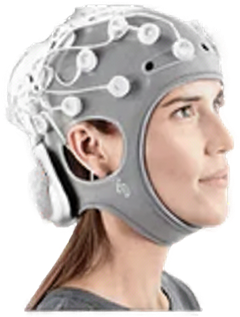
Low Intensity, Transcranial, Alternating Current Stimulation Reduces Migraine Attack Burden in a Home Application Set-Up: A Double-Blinded, Randomized Feasibility Study
- Abstract:
- Background: low intensity, high-frequency transcranial alternating current stimulation (tACS) applied over the motor cortex decreases the amplitude of motor evoked potentials. This double-blind, placebo-controlled parallel group study aimed to test the efficacy of this method for acute management of migraines. Methods: The patients received either active (0.4 mA, 140 Hz) or sham stimulation for 15 min over the visual cortex with the number of terminated attacks two hours post-stimulation as the primary endpoint, as a home therapy option. They were advised to treat a maximum of five migraine attacks over the course of six weeks. Results: From forty patients, twenty-five completed the study, sixteen in the active and nine in the sham group with a total of 102 treated migraine attacks. The percentage of terminated migraine attacks not requiring acute rescue medication was significantly higher in the active (21.5%) than in the sham group (0%), and the perceived pain after active stimulation was significantly less for 2–4 h post-stimulation than after sham stimulation. Conclusion: tACS over the visual cortex has the potential to terminate migraine attacks. Nevertheless, the high drop-out rate due to compliance problems suggests that this method is impeded by its complexity and time-consuming setup.
- Patologie/Applicazioni:
- Anno:
- 2020
- Tipo di pubblicazione:
- Articolo
- Parola chiave:
- emicrania; tES; stimolazione elettrica transcranica; tACS; stimolazione transcranica a corrente alternata
- Testata scientifica:
- MDPI
- Mese:
- 11
- Nota:
- Questo studio randomizzato e controllato ha valutato l’efficacia della stimolazione transcranica a corrente alternata (tACS) a bassa intensità (0,4 mA, 140 Hz) applicata sulla corteccia visiva come trattamento domiciliare per attacchi acuti di emicrania. Su 40 pazienti arruolati, 25 hanno portato a termine il protocollo (16 nel gruppo attivo, 9 nel gruppo sham) sono state trattate in tutto 102 crisi. I pazienti hanno fatto uso della tACS al manifestarsi dei primi sintomi emicranici e il numero di attacchi terminati entro 2 ore senza ricorrere a farmaci di soccorso ha mostrato un tasso significativo del 21,5 % nel gruppo attivo, contro lo 0 % nel gruppo controllo. Inoltre, il dolore percepito è risultato significativamente ridotto per 2–4 ore dopo la stimolazione attiva rispetto allo sham. Questi dati indicano chiaramente il potenziale della tACS per terminare e/o limitare la portata di attacchi emicranici acuti. La stimolazione tACS può quindi porsi come opzione non farmacologica efficace nella gestione acuta dell’emicrania, con risultati clinici significativi ma necessità di ottimizzazione tecnica.
- DOI:
- 10.3390/brainsci10110888
Hits: 108
La nostra storia
GEA soluzioni si affaccia nel 2013 al mercato della strumentazione medicale di alto livello tecnologico ma la sua storia parte da più lontano, clicca qui per approfondire.
GEA SOLUZIONI SRL
via Spalato 72/A, Torino
Tel.: 011 5821948
Email: info @ geasoluzioni.it
P. IVA IT11696920013
REA TO1233648