- +39 011 5821948
- info@geasoluzioni.it
- Lun - Ven 8:00 - 17:00






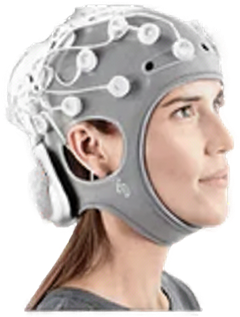
Home-Based Individualized Alpha Transcranial Alternating Current Stimulation Improves Symptoms of Obsessive-Compulsive Disorder: Preliminary Evidence from a Randomized, Sham-Controlled Clinical Trial
- Abstract:
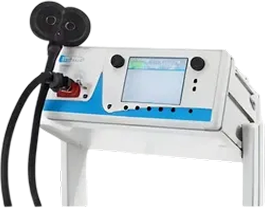
- Obsessive-compulsive disorder (OCD) is a debilitating mental health condition that is largely resistant to conventional treatments, such as pharmacotherapy and behavioural interventions. Individualized noninvasive brain stimulation techniques such as transcranial alternating current stimulation (tACS) might be capable of successfully treating OCD through modulation of dysfunctional neural circuitry. A randomized, double-blind, sham-controlled, pilot clinical trial involving 25 OCD patients was conducted to investigate the efficacy of tACS in improving OCD severity. Treatments targeting the medial prefrontal cortex (mPFC) were self-administered at home for 6 weeks with a 3-month follow-up. Within the active group, each treatment was delivered at an individualized peak alpha frequency for 30 minutes, while the sham group received 2 blocks of 2-minute treatments at 25 Hz. The clinical severity of OCD and potential symptom improvements were quantified using serial measurements of the Yale-Brown Obsessive-Compulsive Scale (YBOCS), and a linear mixed model analysis was performed to estimate the time-condition effect. There was a significant time-condition interaction in the YBOCS from baseline to 6 weeks (p < 0.0001), indicating that active alpha-tACS was significantly superior to sham in improving OCD severity. A trend-level effect remained at the 3-month follow-up, suggestive of a sustained level of improvement. Additionally, depressive symptoms also showed a significant improvement from baseline to follow-up. Our findings suggest that a six-week, home-based treatment course of individualized alpha-tACS targeting the mPFC is capable of improving OCD symptoms. Further large-scale clinical trials are required to definitively establish tACS as a therapy for OCD.
- Patologie/Applicazioni:
- Anno:
- 2023
- Tipo di pubblicazione:
- Articolo
- Parola chiave:
- stimolazione elettrica transcranica; stimolazione elettrica a corrente alternata; depressione; DOC
- Testata scientifica:
- Wiley Online Library
- Mese:
- 08
- Nota:
- Lo studio mira a valutare l’efficacia della stimolazione transcranica a corrente alternata con trattamento domiciliare per il disturbo ossessivo-compulsivo (DOC). I risultati evidenziano un miglioramento clinicamente significativo nei punteggi della scala Y-BOCS rispetto al gruppo sham, con una riduzione della sintomatologia mantenuta anche a tre mesi di follow-up. L’intervento ha mostrato un'eccellente tollerabilità, assenza di eventi avversi gravi e un buon tasso di aderenza. Inoltre, si è osservata una riduzione dei sintomi depressivi comorbidi, suggerendo un potenziale beneficio transdiagnostico. Questo approccio innovativo, efficace, non invasivo e accessibile, apre la strada a nuove prospettive terapeutiche per pazienti refrattari ai trattamenti convenzionali e sottolinea la validità di tACS come promettente strategia neurotecnologica domiciliare nel trattamento del DOC.
- DOI:
- doi.org/10.1155/2023/9958884
Hits: 139
La nostra storia
GEA soluzioni si affaccia nel 2013 al mercato della strumentazione medicale di alto livello tecnologico ma la sua storia parte da più lontano, clicca qui per approfondire.
GEA SOLUZIONI SRL
via Spalato 72/A, Torino
Tel.: 011 5821948
Email: info @ geasoluzioni.it
P. IVA IT11696920013
REA TO1233648