- +39 011 5821948
- info@geasoluzioni.it
- Lun - Ven 8:00 - 17:00








Pubblicazioni
Repeated net-tDCS of the hypothalamus appetite-control network enhances inhibitory control and decreases sweet food intake in persons with overweight or obesity
- Abstract:
- Background: reduced inhibitory control is associated with obesity and neuroimaging studies indicate that diminished prefrontal cortex activity influence eating behavior and metabolism. The hypothalamus regulates energy homeostasis and is functionally connected to cortical and subcortical regions especially the frontal areas. Objectives: we tested network-targeted transcranial direct current stimulation (net-tDCS) to influence the excitability of brain regions involved in appetite control. Methods: in a randomized, double-blind parallel group design, 44 adults with overweight or obesity (BMI 30.6 kg/m2, 52.3 % female) received active (anodal or cathodal) or sham 12-channel net-tDCS on the hypothalamus appetite-control network for 25 min on three consecutive days while performing a Stop-Signal-Task to measure response inhibition. Before and after stimulation, state questionnaires assessed changes in desire to eat and food craving. Directly after stimulation, participants received a breakfast buffet to evaluate ad-libitum food intake. An oral glucose tolerance test was conducted at follow-up. Resting-state functional MRI was obtained at baseline and follow-up. Results: the Stop-Signal Reaction Time (SSRT) was shorter in both active groups versus sham, indicating improved response inhibition. Additionally, a stronger increase in hypothalamic functional connectivity was associated with shorter SSRT. Caloric intake of sweet food was lower in the anodal group versus sham, but no main effects between groups were observed on total and macronutrient intake, food craving ratings and desire to eat. At follow-up, no differences were observed between groups on peripheral metabolism. Conclusion: our study suggests that modulating hypothalamic functional network connectivity patterns via net-tDCS may improve food choice and inhibitory control.
- Patologie/Applicazioni:
- Anno:
- 2025
- Tipo di pubblicazione:
- Articolo
- Parola chiave:
- tDCS; stimolazione elettrica transcranica; obesità; disturbi alimentari
- Testata scientifica:
- Brain stimulation
- Mese:
- 05
- Nota:
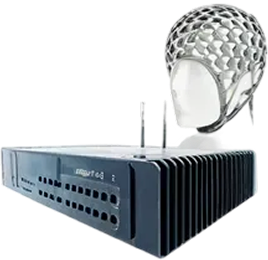
- In questa pubblicazione, gli autori hanno valutato l’efficacia della stimolazione elettrica transcranica (tDCS) come supporto a un trattamento comportamentale per adulti obesi, concentrandosi in particolare sull’influenza della tDCS nel controllo degli impulsi. Le aree cerebrali stimolate sono state le regioni prefrontali e l’ipotalamo, zone in cui una ridotta attività elettrica è spesso associata a cattive abitudini alimentari e a disfunzioni metaboliche. Nei soggetti trattati è emersa una riduzione nell’assunzione di cibi dolci e ad alto contenuto calorico, oltre a un miglioramento nello Stop-Signal Reaction Time, un indicatore del controllo inibitorio. Questi risultati suggeriscono che la tDCS possa rappresentare un'opzione promettente per il trattamento dei disturbi alimentari. Lo studio è stato condotto utilizzando lo stimolatore transcranico Starstim a 32 canali.
- DOI:
- 10.1016/j.brs.2025.04.013
La nostra storia
GEA soluzioni si affaccia nel 2013 al mercato della strumentazione medicale di alto livello tecnologico ma la sua storia parte da più lontano, clicca qui per approfondire.
GEA SOLUZIONI SRL
via Spalato 72/A, Torino
Tel.: 011 5821948
Email: info @ geasoluzioni.it
P. IVA IT11696920013
REA TO1233648